

In most countries, the way Andy Burnham came to hold the most powerful job in the country would be described as a coup. A man with no personal mandate, who did not even stand at the last General Election, is now in charge of the government and talking of implementing ten-year plans. He has declared his intentions of upending the political consensus of the last forty years in what could be the most consequential change of Britain’s direction in generations.
But it won’t be. Just like Starmer before him, and Sunak before him, and the many other sorry characters that have squatted in Number Ten over the last decade, Burnham’s promises of big change will never materialise. He has executed an almighty coup only to realise a long-standing career ambition and to become even more well known, and, as he hopes in vain, even more well liked. He has been given an enormous amount of power to transform the country, but will never use it.
It is one of the few causes of optimism that as dire as Britain’s current predicament is, we have a political system that makes it exceedingly easy to radically turn the country around. Few democracies boast a level of executive power that is available to British prime ministers. Our prime ministers are not constrained by any written constitution, nor subservient to a political president, or (usually) forced to rely on a coalition of parties for continued support.
Despite the enormous political power they hold, successive prime ministers have utterly failed to use their position to bring about the changes their position would allow them to. Perhaps they fail to realise just how much power is available to them, but more likely, they are too deeply wedded to the current consensus to dare to change anything, and lack the political backbone to go beyond it.
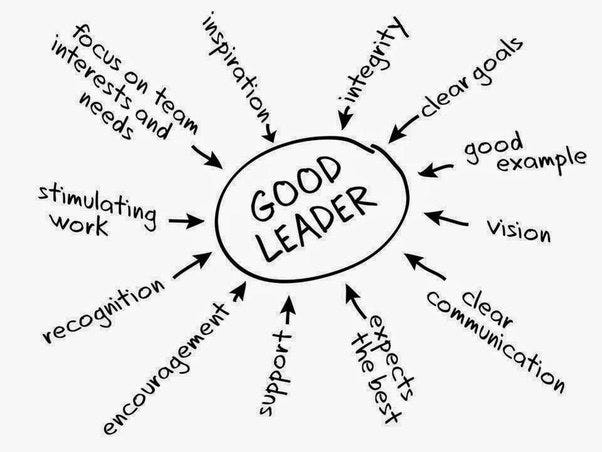
What makes a great, truly historic, world-changing leader is how they wield power. A historic leader uses the power he holds to mould the country into his image through force, strength and sheer willpower.
This is why the British public is so rightly angry with our political class: they can plainly see that the problems the country faces are not technical, but political. We could put an immediate end to the flood of small boats illegally entering Britain by having the Royal Navy push them back. We could rapidly boost our economy by using our North Sea oil and gas reserves to their full potential. We could bypass the usual planning system to hugely expand prison capacity in a matter of months so that dangerous criminals are no longer released early to terrify communities. And so on, and so on. None of these problems are beyond our technical abilities. All of them could be solved.
So why don’t we? Because Britain is stuck with the same set of politicians with the same set of turgid ideas and the same fear of using the power they have. As much as each new prime minister talks of their desire to change things, once they actually have the power to do so, they are too scared to lead, too scared to upset the system they’ve inherited, and too scared to take on the vested interests that are dragging this country down a path of decline.
And so it will be with our latest prime minister, Andy Burnham, who has gone even further than most in embracing powerlessness. Instead of getting to work on transforming the country, he used his first speech as prime minister to declare that he will “carry power into every postcode in the land”, whatever that means. Like his predecessors, he enters Number Ten not with a plan on how to use the power he now has, but offering purely platitudes. Apparently politics will now be “more collaborative”, Britain will now “reindustrialise”, and he will usher in “a new political model, and a new economic model”. Haven’t we heard all this before?
This is especially unforgivable from a man who has been eyeing up the role of prime minister since at least 2010, and has known for months the enormous role he was about to snatch from Keir Starmer. He has had ample time to prepare for power, so why is the best he can offer still just a series of platitudes? Because, like those that came before him, he has no real intention of using the power he now has to change anything of consequence.
Instead, Burnham insists that we just wait. Wait until later next year for the big reveal of what his plan for government is. Wait ten years whilst this plan is supposedly going to be enacted. Just wait and hope that a man who was laughed out of Westminster a decade ago for being such a mediocrity that he made Jeremy Corbyn appear a political genius will somehow transform into the great statesman this country needs.
But why should we wait ten years? Why should young people waste more years of their lives being unable to find a job? Why should countless communities be subjected to masses of unvetted foreign men being plonked into their neighbourhoods against their wishes for years to come? Why should drivers let their cars take a battering from potholes because local government can’t even do the basics? Why should we wait for a man who stated that his first goal as prime minister is to end rough sleeping, something he pledged to do almost a decade ago as Mayor of Greater Manchester and completely failed to deliver?
Britain cannot afford to wait, nor should it.
A real leader, one fit for the moment, would wield the power available to them as prime minister from day one. Obstacles that predecessors have hidden behind – the ECHR, international treaties, judicial rulings, and so on – could be swept aside or scrapped by any prime minister who wanted to.
The country demands it, and until we get it, approval ratings will continue to crash, and Britain’s political class will continue to be hated. Rightfully so.
A political revolution will sweep Britain; it’s only a matter of time.